Uber
August 7, 2025 — New Delhi, India — Uber is in early discussions with private equity firms and banks to secure funding for its expanding robotaxi business, CEO Dara Khosrowshahi revealed on Wednesday. The move signals Uber’s growing push into self-driving technology, which it views as a long-term opportunity despite ongoing questions about its profitability.
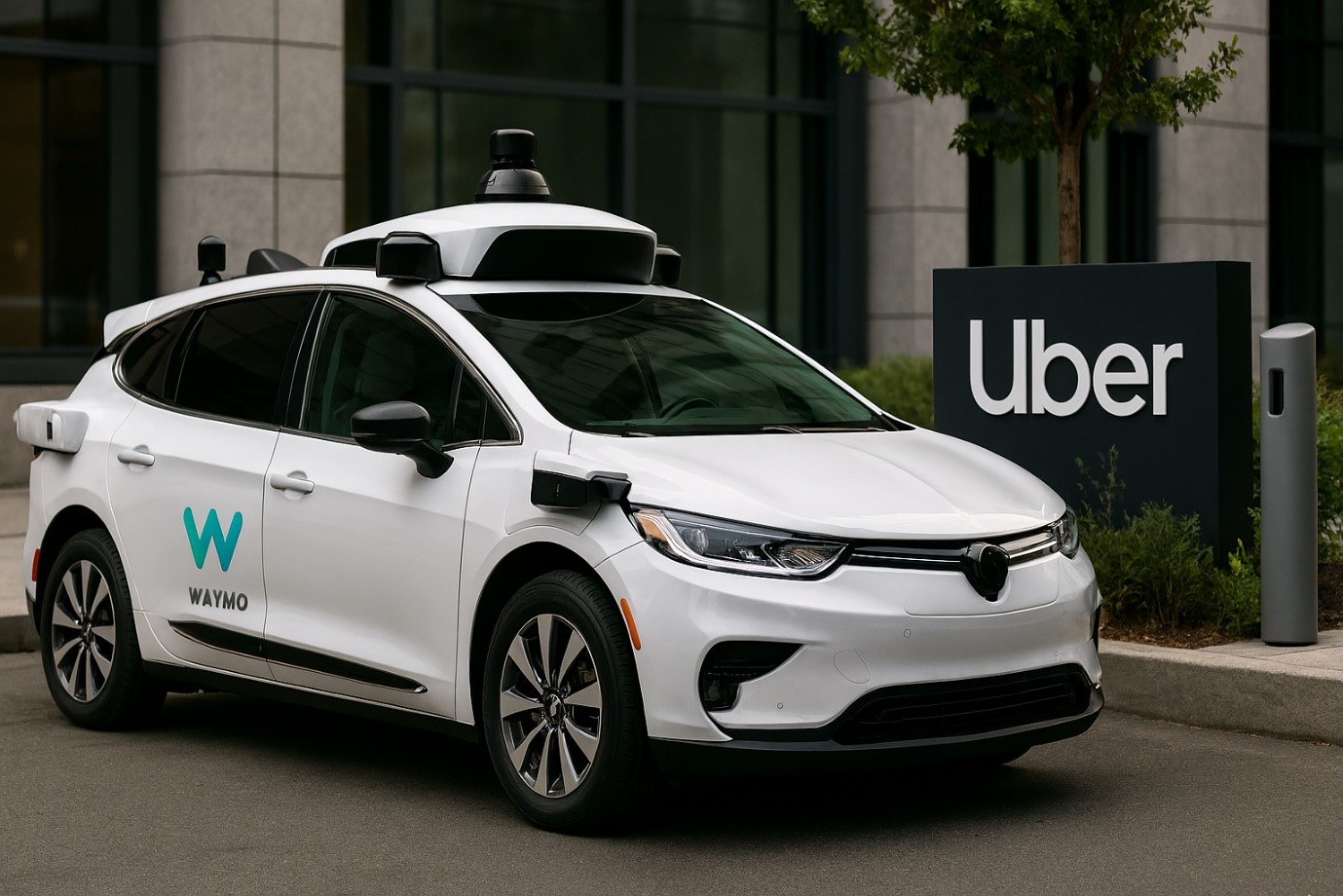
The ride-hailing company is currently partnering with Waymo, Volkswagen, and Lucid Motors to offer autonomous rides in select U.S. cities. Speaking to investors, Khosrowshahi stated Uber’s plan to operate under three different business models. These include paying robotaxi owners a fixed rate, sharing revenue with fleet operators, and eventually owning its fleet while licensing self-driving software.
“We are talking to private equity players, we have talked to banks,” Khosrowshahi said. “Once we prove the revenue model… There will be plenty of financing to go around.”
For now, Uber plans to use only a small portion of its approximately $7 billion in annual cash flow to support robotaxi deployments. The company is also open to selling minority stakes in certain ventures. This could help raise additional capital for its expansion.
Uber currently offers Waymo-powered rides in Austin, Texas, and Atlanta, Georgia. Earlier this year, it announced a long-term partnership with Volkswagen. The deal aims to bring thousands of autonomous electric vans to U.S. roads. Just last month, Uber signed a $300 million deal with EV startup Lucid and self-driving tech firm Nuro. The agreement will roll out over 20,000 autonomous vehicles over the next six years.
Analysts say robotaxis could lower Uber’s dependence on human drivers and reduce operating costs in the long run. Still, they caution that profits may be years away. Regulatory challenges are also likely to remain a hurdle.
Despite growing competition from Tesla and Waymo, both expanding their autonomous services, Uber says it hasn’t seen any drop in demand in cities like Austin or San Francisco. Tesla began offering a limited robotaxi service in Austin in June. It also started ride-hailing operations in the Bay Area last month.
Ken Mahoney, CEO of Mahoney Asset Management, said the robotaxi market holds big potential. “To a lot of these companies, it does seem this will be a worthwhile endeavor,” he noted. He cited high expectations for the market’s future size.
While Uber’s robotaxi business is still in its early stages, the company appears committed to leading in a space many believe could redefine the future of transportation.
About the Author