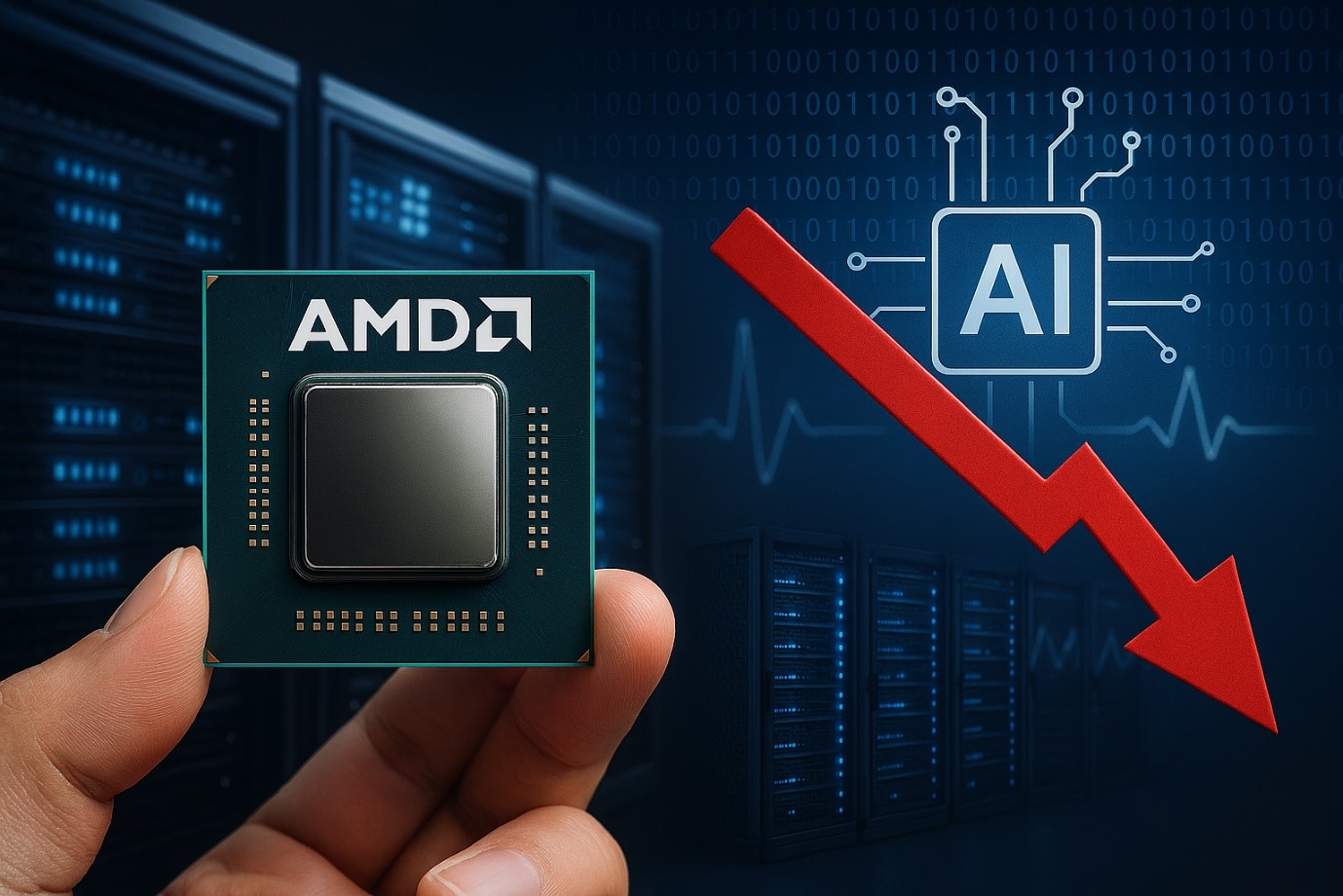
AMD Data Center
AMD data center results surprised many investors and market analysts. Despite strong overall revenue, the data center division stumbled badly. Export restrictions and fierce competition hit AMD hard, causing its stock price to tumble. What exactly went wrong? And can AMD bounce back in this crucial market? This blog breaks down the numbers, the challenges, and the high-stakes battle AMD faces to stay competitive in the fast-evolving data center landscape.
Revenue Growth Overshadowed by Export Setbacks
Although AMD reported solid revenue growth overall, the data center unit fell short. As a result, U.S. export controls on advanced chips forced AMD to write down its inventory. The U.S. placed export controls on advanced chips headed to China, leading AMD to write down a large chunk of its inventory. These rules disrupted AMD’s supply chains and delayed key shipments.
China still plays a crucial role in AMD’s data center business. Moreover, new export licenses now create uncertainty, putting future revenue at risk. Consequently, this change complicates AMD’s global plans, especially when it comes to chip deployment.
Still, AMD isn’t sitting. The company pushes forward, aiming to diversify its customer base and lessen dependence on markets affected by restrictions. This approach could reduce risk and help steady revenue over time.
Stock Market Reacts to Weak AMD Data Center Results
Even with strong revenue growth, AMD’s stock took a hit after the earnings report. The data center segment showed an operating loss, reversing last year’s profits. As a result, many investors expected better results given the rising demand for data center infrastructure.
Analysts remain split. Some believe in AMD’s long-term strategy and its potential to bounce back. Others worry about execution challenges in the near term. How AMD handles trade restrictions and expands its offerings will be crucial to restoring investor trust.
Company leaders emphasize innovation and resilience. They continue investing heavily in next-generation chips and software platforms. These efforts aim to position AMD as a serious contender in the hardware market.
Focus on Custom Chips and Open-Source Advantage
The AMD data center results highlight the company’s focus on innovation. The MI300X chip targets workloads needing large memory and energy efficiency. These strengths fit well with enterprise demands and complex computing tasks.
Benchmark tests reveal strong performance in specific areas. Several cloud providers and tech firms are already testing AMD-powered clusters. Early adopters show growing interest in what AMD offers.
AMD’s open-source ROCm software supports popular frameworks, attracting developers and research groups. While competitors maintain proprietary systems, AMD’s open-source approach is gaining ground.
Moreover, AMD designs custom chips tailored to specific enterprise needs. This strategy sets AMD apart in a crowded market.
Market Dynamics: AMD vs. Nvidia
The AMD data center results show the company’s drive to narrow the gap with Nvidia. Nvidia dominates the chip market, especially for training workloads and sovereign deployments. AMD focuses on cost-effective inference chips and open ecosystems.
Competition has heated up. AMD expands its product line and invests in custom chip development. These moves aim to attract companies needing specialized solutions. Success could help AMD capture a bigger market share.
Pricing plays a big role. AMD offers more affordable alternatives to Nvidia’s high-end chips. This appeals to budget-conscious buyers and could help AMD grow in emerging markets and mid-tier enterprise segments.
Data Center Infrastructure Market Outlook
The Data Center Infrastructure Market is poised for significant growth, projected to reach a remarkable US$160.4 billion by 2031, up from US$70.3 billion in 2024, reflecting a robust CAGR of 12.5% during the forecast period from 2025 to 2031. This market expansion is driven by the increasing volumes of data and the rapid adoption of edge computing technologies. Key segments include hardware and services, with end users ranging from enterprises to cloud service providers. Additionally, the trend towards sustainable and green data centers is shaping the future landscape of the Data Center Infrastructure Market, presenting new opportunities for innovation and efficiency. As the market evolves, understanding its dynamics will be crucial for stakeholders aiming to capture a share of this growing sector.
Conclusion: A Strategic Crossroads for AMD
The AMD data center results reveal a company at a turning point. Demand for processors and gaming chips remains strong, showing AMD’s resilience. Yet, export restrictions and fierce competition expose its vulnerabilities.
Future success depends on execution. AMD must scale chip adoption, navigate trade policies, and broaden its software ecosystem. Overcoming these obstacles could make AMD a top player in the data center hardware space.
For now, investors watch cautiously. The coming quarters will reveal if AMD can improve its data center results. Adaptability, innovation, and solid execution will determine AMD’s path forward in this fast-changing tech world.
Resources
AMD- AMD Reports Second Quarter 2025 Financial Results; AMD Instinct™ MI300X Accelerators
About the Author