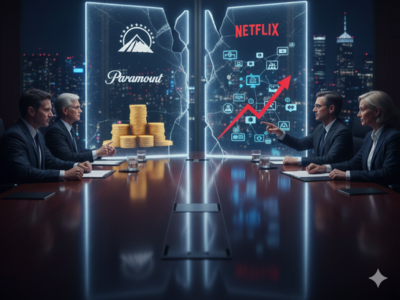
WB-Paramount Merger Talks: Warner Rejects $108bn Offer
Warner Bros Discovery is officially moving toward a historic decision regarding its corporate future. The board of directors is preparing to recommend that shareholders reject a massive $108.4 billion hostile bid from Paramount. This significant development follows a series of high-stakes WB-Paramount Merger Talks that have recently intensified. Paramount, led by CEO David Ellison, launched an all-cash offer of $30 per share last week. This proposal aims to acquire the entire company, including prestigious assets like CNN and the HBO network. However, the Warner Bros board currently prefers a separate $82.7 billion agreement already signed with Netflix. Reports indicate that the company will file its formal opposition to the Paramount bid as early as Wednesday. This move highlights the growing tension within the WB-Paramount Merger Talks over value and deal certainty.
The leadership at Warner Bros Discovery expresses deep skepticism about the financing behind the Paramount proposal. Much of the equity backing the bid relies on a revocable trust managed for billionaire Larry Ellison. Because this trust is revocable, the assets could theoretically be withdrawn at any time during the process. Consequently, the board worries about the lack of legal recourse if the funding evaporates. These concerns have stalled progress in the WB-Paramount Merger Talks, despite the attractive headline price. Additionally, the exit of a key financial partner has further complicated the situation for Paramount. Jared Kushner’s investment firm, Affinity Partners, recently withdrew from the bidding consortium. This departure removes a notable layer of support during the critical WB-Paramount Merger Talks phase.
Furthermore, the board believes the Netflix transaction offers a more stable path toward a successful closing. Netflix has agreed to pay a substantial $5.8 billion termination fee if the deal fails. This massive commitment signals strong confidence in navigating the complex regulatory environment. In contrast, the WB-Paramount Merger Talks involve greater uncertainty regarding operational flexibility during the review period. Paramount’s offer reportedly places strict limits on how Warner Bros manages its debt and balance sheet. Therefore, the board views the Netflix deal as a more strategically sound option for the long term. The ongoing WB-Paramount Merger Talks continue to reflect the broader battle for dominance in the streaming industry.
Moreover, the regulatory landscape adds another layer of difficulty to the WB-Paramount Merger Talks. Paramount argues its bid is pro-competitive because it would combine two smaller streaming platforms to rival Netflix. However, political figures have already begun to scrutinize the potential impact of these massive media consolidations. President Donald Trump has expressed frustration with Paramount’s ownership of CBS News in recent social media posts. Such political friction could create unexpected hurdles for the WB-Paramount Merger Talks in Washington. Meanwhile, the Netflix deal focuses on studio and streaming assets while spinning off cable networks separately. This structure might offer a cleaner exit for Warner Bros from the declining linear television market.
Ultimately, the board’s likely rejection underscores a preference for execution certainty over a higher price tag. The WB-Paramount Merger Talks have forced the company to choose between a tech giant and a legacy rival. Shareholders now face a difficult choice between immediate cash and a long-term strategic partnership. As the WB-Paramount Merger Talks reach a boiling point, the industry waits for Paramount’s next move. David Ellison has previously suggested that his current offer is not necessarily his final price. This suggests the bidding war for Warner Bros Discovery may still have more surprises in store. The outcome will fundamentally reshape how audiences consume entertainment across the globe for the next decade.
The board remains diligent in protecting investor interests during these volatile WB-Paramount Merger Talks. They must ensure that any accepted offer has the financial teeth to survive a multi-year government review. The Netflix offer includes a mix of cash and stock that aligns with their future digital goals. Conversely, Paramount’s all-cash play is tempting but carries a “black box” of international funding sources. As Wednesday approaches, the formal rejection will clarify the board’s legal standing in the WB-Paramount Merger Talks. It will also put the ball back in David Ellison’s court to either raise the bid or retreat. This saga represents the largest media shakeup since the original AT&T and Time Warner merger years ago.
About the Author