Robotics is rapidly moving past the old, rigid assembly lines. In 2026, we are witnessing a complete transformation. Humanoid robots, highly autonomous mobile systems, and digital twin technology are converging. This powerful fusion is redefining entire industries and our daily lives. From biotech breakthroughs to home assistance, robotics beyond factory floors is stepping into domains once only seen in science fiction. This blog explores the current trends, government initiatives, and real-world applications driving this exciting new era.
The Practical Arrival of Humanoid Robots
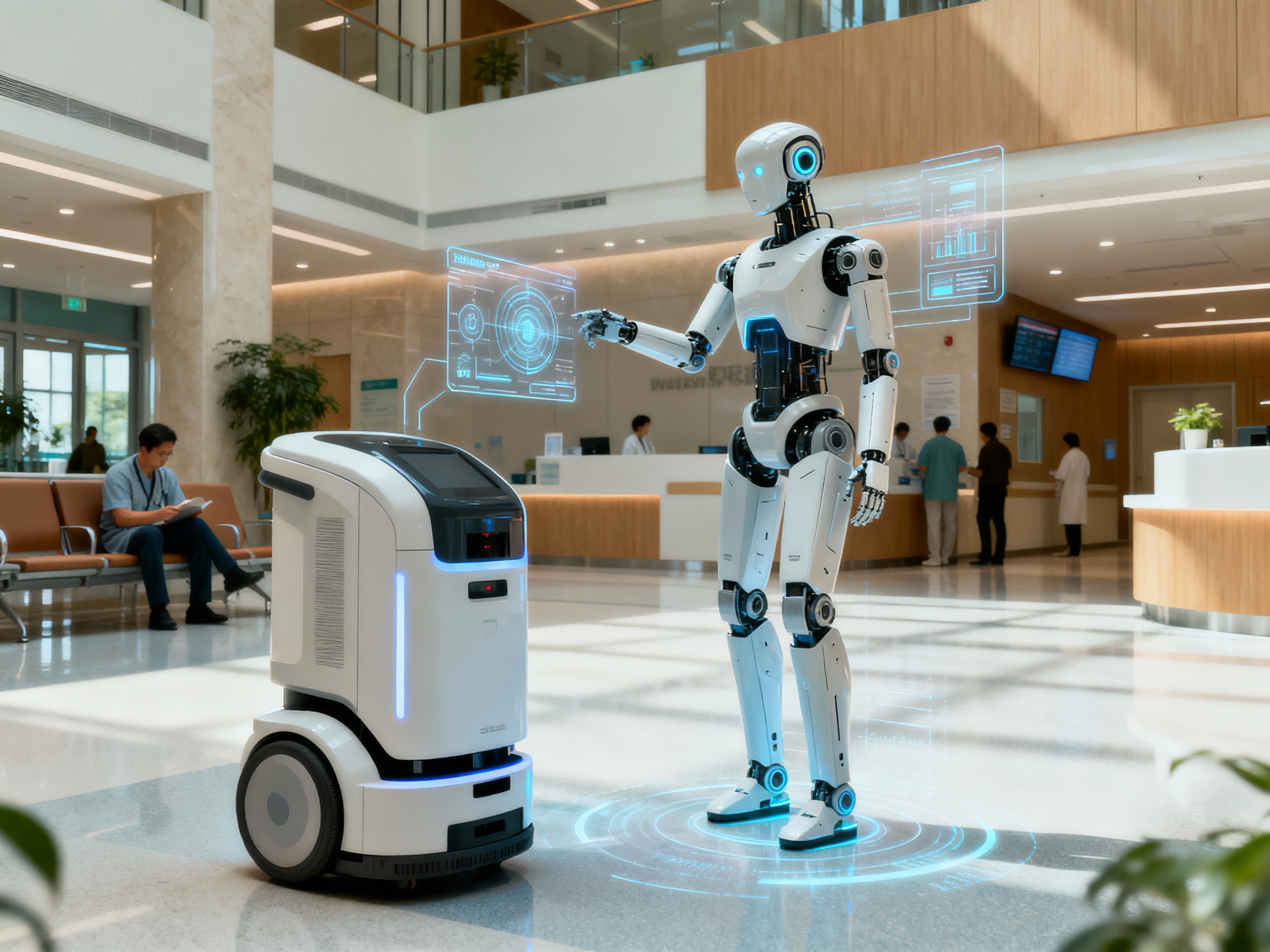
Humanoid robots have left the research lab. They are now evolving into practical, adaptable solutions. Companies like Tesla’s Optimus, Figure AI, and Agility Robotics are leading this charge. These advanced machines can walk, lift heavy items, and interact naturally with humans. Their roles are no longer limited to the manufacturing sector. They are now entering retail, hospitality, and even elder care environments.
- Humanoids offer necessary flexibility where traditional robots struggle.
- Their human-like form lets them navigate spaces built for people.
- They are ideal for household chores, customer service, and direct patient assistance.
- Goldman Sachs projects shipments of over 50,000 units in 2026.
- This major increase signals their rapid move toward mainstream commercial use.
Surveys show many travelers are comfortable being greeted by these robots. They are now commercially deployed as core service assets in many hotels.
Digital Twins: The Virtual Blueprint for Robotics
Digital twin technology is transforming how we manage robotics. A digital twin is a virtual replica of a physical system. Key organizations like NIST and the NSF launched major initiatives to integrate this technology. They use it for predictive maintenance and real-time simulation.
- Digital twins allow engineers to test scenarios virtually first.
- This dramatically reduces costly downtime in the real world.
- It significantly improves safety and accelerates innovation cycles.
- NIST advocates for using a zero-trust cybersecurity model with digital twins.
- This is necessary to manage inherent security risks across complex systems.
In healthcare, digital twins model patient-specific treatments before surgery. In logistics, they optimize robot fleet performance seamlessly. This virtual testing ensures that physical robots are safer and more efficient before deployment.
Autonomous Mobile Robots (AMRs) Take the Field
Autonomous Mobile Robots (AMRs) are revolutionizing logistics and agriculture globally. These specialized robots use AI-driven navigation and advanced sensor technology. They adapt to dynamic environments easily. They deftly avoid obstacles and often collaborate with human workers.
- E-commerce growth and labor shortages drive high demand for AMRs.
- The U.S. International Trade Commission reports a large surge in domestic AMR production.
- Agricultural robots now handle tasks like planting, harvesting, and crop monitoring.
- This greatly reduces the industry’s reliance on manual labor.
- It also significantly improves overall efficiency and food output.
These smart, mobile machines are rapidly becoming the standard in modern warehousing. They allow facilities to operate 24/7 with minimal human intervention.
Robotics in Biotech and Life-Saving Healthcare
Healthcare robotics is entering a powerful new era of development. The ARPA-H AIR program is funding autonomous surgical robots. These advanced machines are capable of performing highly time-critical interventions. A prime example is stroke thrombectomy. This is a life-saving procedure that currently requires a specialist.
- Only about 12% of eligible stroke patients receive this treatment now.
- Autonomous robots could deliver curative thrombectomies at any local hospital.
- This will vastly improve health outcomes and life expectancy for stroke victims.
- NIH is also funding research into soft robotic exosuits.
- These devices help patients recover mobility after injury or illness.
Robotics in biotech also accelerates drug discovery. They automate even the most complex laboratory procedures with very high precision. This increases patient care by way of personalization and accuracy.
The Final Frontier: Space and Extreme Environments
Robots are extending human reach into the most extreme environments. NASA’s CADRE project showcases the future of space robotics. The project uses autonomous, solar-powered robots for exploration. They use digital twin planning for complex lunar missions.
These robots are specifically designed to operate in harsh conditions. This makes them indispensable for both space research and domestic disaster recovery efforts. For instance, microrobots are being developed for medical interventions. These tiny devices could perform targeted biopsies or clot destruction inside the body. This innovation moves care far beyond the traditional clinic walls.
Conclusion: A Collaborative Future for All
Robotics is about to change the world, even beyond the factory floors in 2026. This is more than a technological shift; it’s a movement into a human-robot collaborative future. There are honest ethical questions to be debated. The impact on the human workforce and issues relating to data privacy have to be considered. Governments must continue to develop robust regulatory frameworks that balance rapid innovation with accountability to the public. By 2030, robots will be as common as smartphones.
About the Author