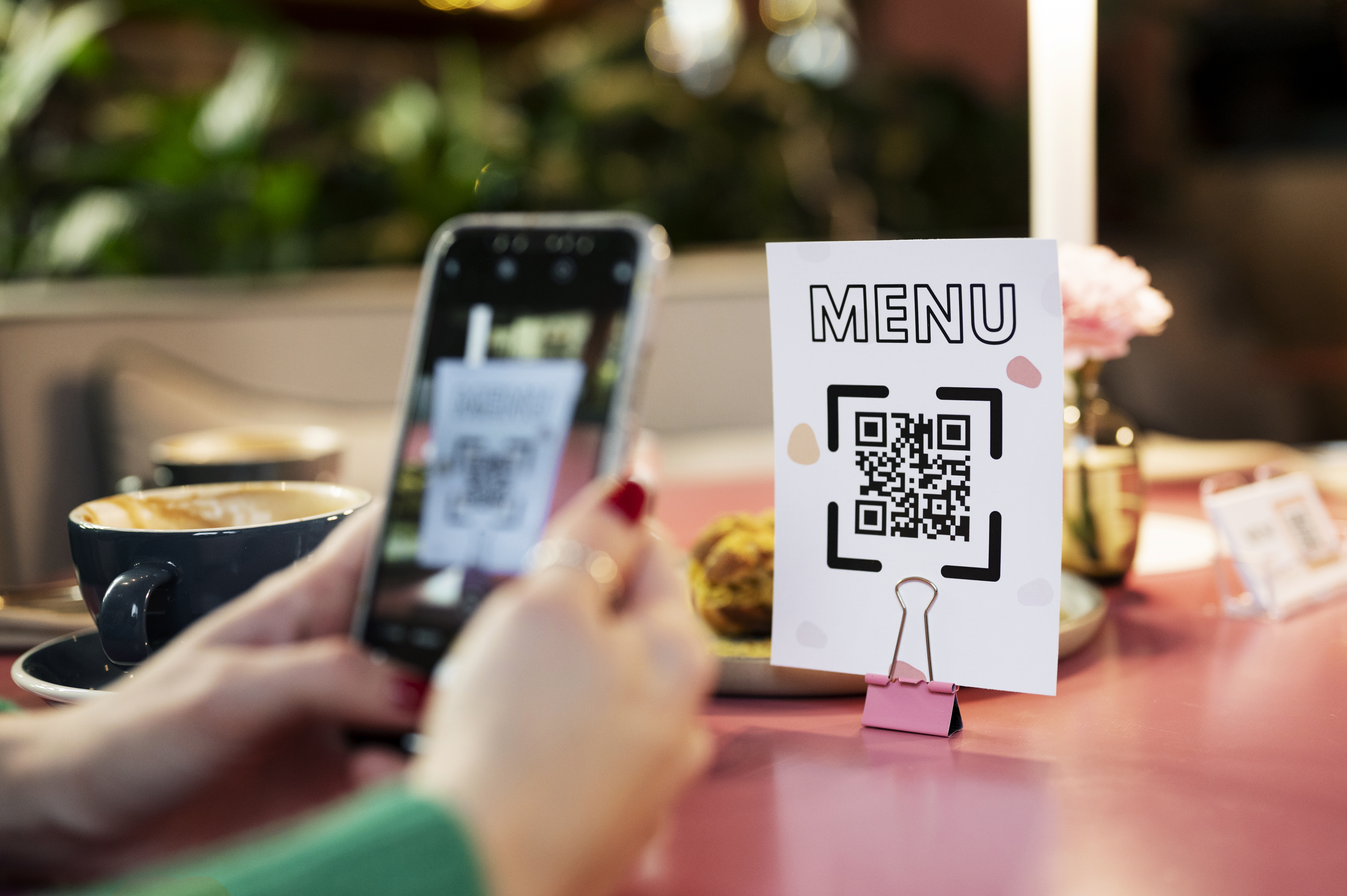
There was a time when flipping through a laminated menu was part of the restaurant ritual. Today, your phone does the flipping, scanning a QR code that leads to a sleek, scrollable interface. Welcome to the age of Digital-Only Dining, where ink-stained menus are replaced by pixels, and servers now gesture vaguely toward a black-and-white square stuck to your table.
But are we truly okay with this change? Let’s explore this digital evolution in dining with a dash of satire, a sprinkle of skepticism, and a healthy serving of insight.
The Rise of the Almighty QR Code
The QR code was once a clunky marketing tool. Now, it’s the gatekeeper to your Caesar salad.
COVID-19 fast-tracked its rise. Restaurants, scrambling for “contactless solutions,” embraced QR codes like a long-lost relative at a tech reunion. What began as a safety measure morphed into a full-blown revolution. Suddenly, printed menus felt like relics from the caveman era.
And thus began the reign of Digital-Only Dining.
More Convenience… or Just More Work?
At first glance, scanning a QR code feels efficient. You’re saving trees, right? But peel back the layers, and the experience gets stickier than maple syrup on a brunch table.
Let’s walk through it:
- You sit down.
- You’re handed nothing, except a nudge toward the QR code.
- You scan, wait, scroll, zoom, squint.
- You accidentally order duck confit instead of a Diet Coke.
Of course, there’s no server around. They’re too busy wiping down tables or explaining the Wi-Fi password to someone whose phone just died. Is this convenience, or forced labor disguised as tech-forward hospitality?
Generational Divide: Boomers, Meet the Browser Tab
For digital natives, Digital-Only Dining may feel natural, even preferable. Why talk to a person when you can tap a screen in glorious silence?
But not everyone sees it that way. Older generations often find themselves wrestling with Zoom functions and frozen browsers. What used to be a joyful meal out becomes a frustrating tutorial in mobile web navigation. Imagine your grandma trying to order soup with shaky Wi-Fi and 8% battery.
It’s less dinner, more digital obstacle course.
Hospitality, But Hold the Human Touch
Here’s a wild thought: what if part of dining out was… human interaction?
Menus once sparked conversations. “Ooh, what are you thinking of getting?” was a classic line. Now it’s “Do you have signal?” or “Mine won’t load, can you just order for me?” Servers, once menu guides, now resemble IT support. Instead of recommending wine pairings, they’re explaining why the menu page isn’t loading on Android.
Digital-Only Dining may streamline operations, but it trims down the personal touches that make dining special.
Accessibility: The Elephant in the Dining Room
Let’s talk inclusivity, or the lack thereof. Not everyone owns a smartphone. Some have visual impairments. Others don’t speak the language displayed on the screen. A physical menu can be read, pointed to, and even translated with basic effort.
A digital one? Good luck resizing that PDF on your cracked phone screen in a dimly lit bistro. The assumption that “everyone has a phone” is not just false, it’s exclusionary. Digital-Only Dining unintentionally alienates a chunk of customers.
The Illusion of Innovation
Many restaurants pitch digital menus as “modern” or “innovative.” But is slapping a QR code on a table really innovation? Let’s be honest. In many cases, it’s just cost-cutting in disguise. No need to print or reprint menus. Fewer staff to train. Upselling becomes automated, as “Add Bacon” buttons do their silent dance on every dish.
Yes, it’s clever, but is it progress? Or are we just giving tech a seat at the table, while pushing people out the back door?
When Tech Glitches Join the Meal
You finally get the QR menu to load. You scroll through, make your selection, tap “Order,” and…
Error 404: Dish not found.
Maybe the kitchen’s out, your browser crashed, or Mercury’s in retrograde. Either way, you’re hungry and annoyed. Tech, when it fails, fails hard. A paper menu may get coffee-stained, but it never needs a software update. Digital-Only Dining adds a fragile digital dependency to something as fundamental as eating.
Sustainability: The Only Legit Excuse?
Let’s give credit where it’s due. Digital menus reduce paper waste. That’s a win. In theory, they’re also easier to update, so restaurants can fix prices or typos without a trip to the printer. But sustainability shouldn’t mean sacrificing accessibility, warmth, or customer experience.
The restaurant industry can, and should, go green. But let’s not pretend QR menus are saving the rainforest.
Striking a Balance: Tech and Tradition
Some restaurants are finding a middle ground. They offer both digital and physical menus. Some even hand over tablets for those who don’t want to pull out their phones. That’s the sweet spot. Digital menus aren’t inherently evil. They’re efficient, adaptable, and convenient when done right. But the total erasure of physical menus feels less like innovation and more like laziness.
What We’re Losing in Translation
Menus are more than lists; they’re part of the atmosphere. The leather-bound wine list at a French bistro. The crinkly paper menu at your favorite hole-in-the-wall. The kids’ menu with crayons and cartoon dinosaurs.
Digital-Only Dining standardizes the experience, often at the cost of charm. It’s hard to romanticize a dinner when you’re nose-deep in your own screen, toggling between starters and Snapchat.
QR Fatigue Is Real
Moreover, we must remember the overwhelming volume of QR codes that flood our daily lives. They appear on walls, receipts, posters, ketchup bottles, and, unsurprisingly, right on your dinner table. As a result, innovation quickly starts to feel like irritation. In an already screen-saturated world, perhaps, just perhaps, we no longer need another app standing between us and our appetizer.
Conclusion: Are We Okay with This?
So, are we okay with Digital-Only Dining? The answer isn’t simple. Some love the speed and control. Others mourn the loss of connection and tradition. Like any tech disruption, it brings benefits and baggage.
What matters is choice. Give diners options. Let tech enhance the experience, not replace it. Because no one came to dinner to debug a menu. Until then, if you’re scanning your fourth QR code of the day just to order fries… maybe it’s time we ask the chef to bring back the paper.
With ketchup. Not a download link.
About the Author