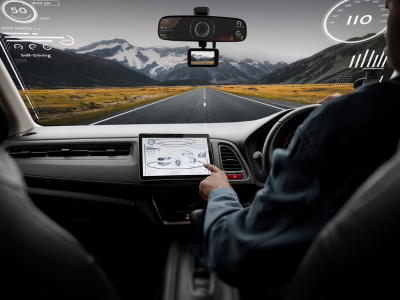
Nvidia has unveiled a new approach for autonomous driving with Reasoning AI. The system promises better decision-making and safer behaviors on complex roads. The company positions this technology as a pivotal advancement for self-driving vehicles. It aims to help cars interpret context and act with logical clarity.
Traditional models often rely on pattern recognition without deeper context. Therefore, they struggle with rare or unpredictable situations on busy streets. Nvidia’s Reasoning AI attempts to bridge that gap with explicit reasoning. Consequently, vehicles can evaluate multiple cues and weigh outcomes more intelligently.
The technology blends perception, prediction, and logical inference in real time. Cameras, lidar, and radar feed data into advanced compute platforms. Then, the system analyzes traffic dynamics and environmental changes quickly. As a result, autonomous vehicles can respond with more confidence and fewer errors.
Moreover, Nvidia emphasizes safer lane changes and smoother merges in dense traffic. The system evaluates relative speeds, intent signals, and local regulations. It then reasons through potential maneuvers before committing to action. Thus, vehicles choose safer options while maintaining efficient flow.
Unexpected events remain a major challenge for autonomy. However, Reasoning AI seeks to reduce uncertainty with structured logic. It considers edge cases and learns from diverse operational contexts. Additionally, it updates strategies without constant manual intervention or rigid rules.
Public trust remains essential for widespread adoption of self-driving cars. Many people worry about reliability during unusual scenarios. Yet, Nvidia believes this technology will improve perceived safety and confidence. Vehicles that can explain decisions may earn lasting acceptance.
Industry observers view Nvidia’s launch as strategically significant. The company already supplies powerful compute for autonomous platforms. By adding explicit reasoning, Nvidia strengthens its automotive portfolio. Furthermore, it sets a benchmark that rivals will likely pursue.
Nvidia highlights efficiency and sustainability benefits beyond safety improvements. Smarter decisions can optimize routes and reduce congestion. Consequently, fleets may lower energy use and emissions over time. This impact could support broader climate and mobility goals.
The platform depends on high-performance GPUs and specialized software stacks. These systems process sensor data and execute reasoning operations rapidly. Therefore, they maintain situational awareness under changing road conditions. Latency reductions help preserve safety margins during dynamic maneuvers.
Automakers may integrate the technology into upcoming releases. Partnerships could speed validation and regulatory progress across regions. Meanwhile, early deployments will test real-world robustness and scalability. Lessons learned will inform broader rollouts and policy frameworks.
Reasoning remains the centerpiece of Nvidia’s pitch to automakers. The company argues that autonomy requires more than perception. Vehicles must reason as conditions evolve and constraints tighten. Hence, structured logic complements machine learning predictions effectively.
Nvidia expects competitive advantages for adopters who prioritize safety and reliability. Brands that demonstrate consistent performance may win consumer trust. Additionally, they can differentiate on comfort, efficiency, and seamless navigation. The market will reward clear safety leadership, according to analysts.
Regulators continue to examine autonomy with cautious optimism. They demand transparency, performance proofs, and incident reporting. Because Reasoning AI could explain choices more clearly, oversight may improve. Therefore, accountability and governance can evolve alongside technical progress.
Global mobility faces rising demand and urban complexity. Consequently, smarter systems will define future transportation experiences. Nvidia’s initiative responds to that pressure with pragmatic innovation. It focuses on safer, smarter, and more resilient vehicle behaviors.
As pilots expand, stakeholders will scrutinize measurable outcomes. They will assess accident reductions, near-miss trends, and operational uptime. Moreover, they will compare performance across varied geographies and weather. Comprehensive validation will shape credibility and market momentum.
Nvidia frames this launch as a major milestone for autonomy. The company blends compute strength with applied reasoning capabilities. It seeks to translate research into consistent real-world performance. Ultimately, it aims to accelerate safe autonomous driving at scale.
If trials confirm benefits, Reasoning AI could reshape expectations quickly. Consumers may view autonomy as more trustworthy and predictable. Cities may leverage fleets for smoother, cleaner mobility. In sum, Nvidia’s move may mark a turning point for self-driving.
About the Author