Peptide Therapy
Pune, India | December 18, 2025
Indian researchers have developed a promising peptide therapy that could dramatically improve treatment for fungal eye infections threatening vision nationwide. This therapy targets fungal keratitis, a severe corneal infection caused by fungi, and gives hope to patients when conventional drugs fail.
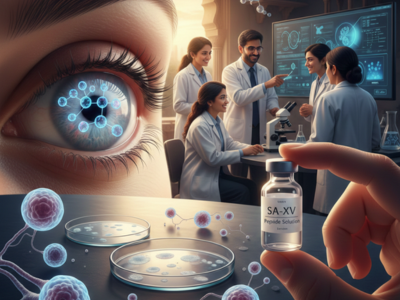
The study was led by scientists from the L V Prasad Eye Institute in Hyderabad and the Bose Institute in Kolkata, both under the Department of Science and Technology (DST), Government of India. They engineered a short, 15-amino-acid molecule named SA XV, which shows powerful antifungal activity while remaining safe for mammalian cells.
Fungal keratitis affects thousands each year in India, particularly in rural areas where agricultural workers sustain eye injuries. Furthermore, poor hygiene and overuse of contact lenses increase infection rates in urban populations. Because the infection can cause permanent vision loss, researchers have urgently pursued more effective treatments.
Currently, clinicians often use the antifungal drug amphotericin B, but its serious side effects limit its use. The drug can damage the kidneys and red blood cells. Many doctors avoid it because it is toxic, highlighting the urgent need for safer alternatives.
This innovative peptide therapy derives from a larger host-defense protein called S100A12. Scientists isolated a short fragment from this natural protein to create SA XV. A compact peptide that remains stable in serum and retains strong antifungal potency with minimal toxicity.
Laboratory studies show that SA XV effectively blocks the growth of major fungal pathogens such as Fusarium and Candida, which commonly cause keratitis. Importantly, the peptide also destroys biofilms and free-living fungal cells, which are often resistant to conventional medications.
Researchers examined how SA XV works at a cellular level. First, the peptide binds to the fungal cell wall and membrane. Then, it enters the fungal cell, accumulates inside, and binds to genomic DNA, stopping the cell cycle. Finally, SA XV attacks the mitochondria and triggers programmed cell death, or apoptosis, in the fungi.
In animal models of keratitis, peptide therapy with SA XV reduced infection severity and promoted corneal healing. This results in most conventional antifungals not being able to achieve this. This dual effect of fighting infection and repairing tissue is especially promising for future clinical applications.
The study, published in the Journal of Biological Chemistry, highlights SA XV’s dual role as an antifungal agent and wound-healing promoter. If tested successfully in humans, this therapy could become a safer alternative to toxic drugs, particularly in regions with limited healthcare access.
Experts note a key advantage of peptide therapy: reduced risk of fungal resistance. SA XV attacks multiple cellular targets within the fungus, making it harder for pathogens to develop resistance compared to single-target medications. This action could preserve treatment effectiveness over time.
Furthermore, SA XV’s safety and accessibility may make it valuable in low- and middle-income regions where fungal keratitis is common. A therapy that combines high effectiveness with low toxicity could reduce vision loss and improve the quality of life for many people at risk.
In conclusion, this peptide therapy represents a major scientific breakthrough against fungal eye infections. With potent antifungal action, wound-healing support, and a strong safety profile, SA XV could redefine keratitis treatment in India and beyond. Continued research, funding, and clinical trials will be essential to bring this innovation from the laboratory to widespread patient care.
About the Author