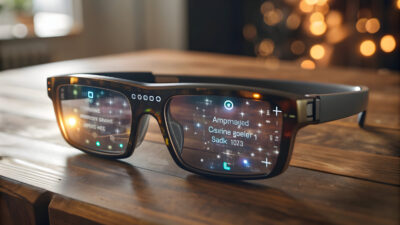
New Delhi, India, December 9- Warby Parker and Google have announced plans to release AI-powered smart glasses in 2026, marking a major step in wearable technology. Revealed at The Android Show | XR Edition, the glasses combine Warby Parker’s design with Google’s AI for a smart, screen-free experience.
The partnership will introduce two types of glasses. The first type will be designed for screen-free interactions, featuring built-in speakers, microphones, and cameras. Users can converse naturally with Google’s Gemini AI, making everyday tasks easier. The second type will include an in-lens display, providing private access to navigation, translations, and other real-time information. Both devices will run on Android XR, ensuring smooth integration with Google’s software ecosystem.
Google’s move signals a strategic comeback in the smart eyewear market. The company had discontinued its consumer-focused Glass product in 2015, after mixed results. By partnering with Warby Parker, Google hopes to overcome past challenges while delivering stylish, functional devices. Warby Parker emphasized that comfort and design remain central, promising glasses that are lightweight and suitable for all-day wear.
The AI-Powered Smart Glasses launch announcement comes at a time when competition in augmented reality is intensifying. Meta has expanded its smart glasses and Quest headset offerings, while Apple introduced its Vision Pro headset earlier this year. By joining forces, Warby Parker and Google aim to carve out a unique position in this fast-growing market, combining fashion, practicality, and advanced AI features.
Google has committed up to $150 million to the project, including equity in Warby Parker and funding for product development. This significant investment underscores Google’s confidence in the potential of AI-Powered Smart Glasses. Industry analysts suggest that these devices could change how people interact with technology, moving beyond traditional screens to more seamless, wearable solutions.
Users of the new glasses will enjoy voice-activated assistance through Gemini AI. The devices will provide context-aware navigation, real-time translation, and other features designed to simplify everyday life. Additionally, prescription and non-prescription options will be available, ensuring the glasses meet the needs of a broad audience. These innovations aim to blend technology and convenience without compromising on style.
Pricing information has not been released, but the companies confirmed that the glasses will be sold through Warby Parker’s retail stores and online channels. This approach ensures accessibility while maintaining the brand’s focus on thoughtful design. Both companies have committed to providing regular updates as development progresses, keeping consumers informed about new features and future models.
The launch in 2026 marks the beginning of a new era in intelligent eyewear. Google and Warby Parker’s collaboration could redefine personal technology by creating devices that are both practical and fashionable. With AI integration, AI-Powered Smart Glasses may soon make everyday tasks, like navigating unfamiliar streets, translating languages, or retrieving information, more natural and effortless.
Experts believe the devices could influence how people interact with digital content, moving toward a future where wearable technology is an extension of daily life. Warby Parker and Google are betting that combining design, comfort, and AI-powered functionality will set their glasses apart in a competitive market. As development continues, anticipation is growing for a product that could change the way people see, and use technology.
The companies plan to launch the first AI-powered smart glasses in 2026, followed by additional models in the coming years. Both companies promise ongoing innovation, aiming to create eyewear that blends advanced technology with style and practicality.
About the Author