Pune, India | December 05, 2025
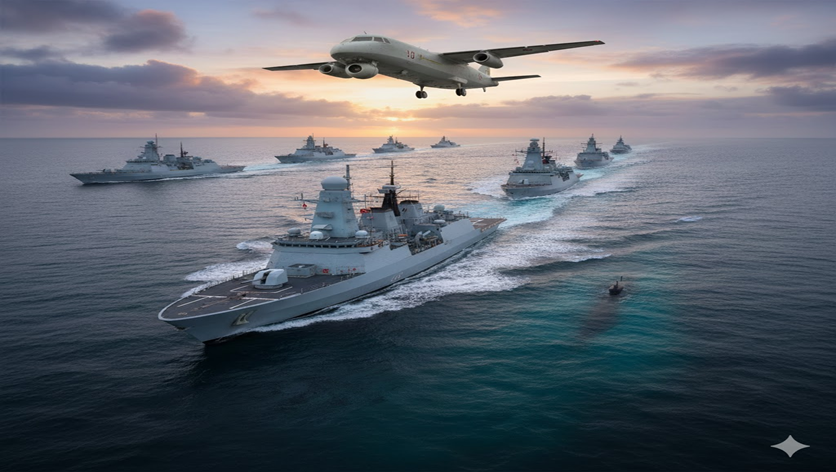
The United Kingdom and Norway have signed a landmark defence pact to operate a joint naval fleet tasked with safeguarding critical North Atlantic routes. Under the terms of the Lunna House Agreement, the two nations will deploy a minimum of 13 anti-submarine warships, eight from Britain and five from Norway, in key patrol zones. This move follows a noticeable uptick in Russian naval activity near UK waters in recent years. Consequently, the collaboration signals a sustained commitment to deter submarine incursions and protect vital sea lanes.
Prime Minister Keir Starmer emphasized the importance of international cooperation amid rising instability. He noted that protecting undersea infrastructure and national borders against potential threats requires coordinated action among allied nations. Furthermore, the pact enhances both countries’ capacity to respond rapidly to hostile maritime activity. It enables faster decision-making and joint reaction times.
London hosted the signing ceremony, with Defence Secretary John Healey and Norway’s Defence Minister Tore O. Sandvik finalizing the agreement before Sandvik’s trip to northern Scotland. During his visit, Sandvik observed P-8 maritime patrol crews monitoring Russian vessels in real time, highlighting the fleet’s immediate operational readiness. Moreover, this focus on real-time surveillance underscores the practical shift from planning to active deployment.
The fleet will initially focus on the Greenland-Iceland-UK gap. A strategic corridor where Russian submarines have frequently penetrated the North Atlantic. In addition to anti-submarine duties, the alliance prioritizes protecting undersea cables and pipelines that support regional energy systems and international data networks. This dual mandate reflects a broader understanding of modern naval warfare, where securing critical infrastructure is as important as tracking and countering submarines.
The agreement also signals deeper military integration between the two countries. Both navies will share advanced technologies, facilities, and training programs. British personnel will receive Arctic-condition training in Norway. That is preparing crews for operations in extreme cold and challenging seas. Additionally, the partners will collaborate on drone surveillance and autonomous mine-hunting missions, expanding the reach and precision of undersea reconnaissance.
Analysts describe the pact as the most consequential UK-Norway naval collaboration in decades. It aligns with a wider European strategy designed to counter expanding undersea threats from Russia and bolster NATO’s northern flank. Earlier this year, Norway committed to purchasing British Type-26 frigates worth £10 billion, which will form the core of the joint fleet. This deal marks the largest UK warship export arrangement to date and significantly strengthens both nations’ anti-submarine capabilities.
By unifying tactics and technologies, the United Kingdom and Norway aim to field a rapid-response force capable of detecting, deterring, and neutralizing undersea threats efficiently. Shared patrols and coordinated exercises will elevate interoperability and readiness across the demanding conditions of the North Atlantic. Furthermore, the alliance reinforces a long-standing strategic partnership, demonstrating mutual dedication to collective defence and critical infrastructure protection. It sets a precedent for future European maritime alliances in response to evolving security challenges.
The agreement reflects a shift in modern naval operations toward enhanced undersea surveillance, swift response, and the protection of economic and communications lifelines. Both nations seek to maintain a technological edge in anti-submarine warfare. That is preparing for potential escalation and ensuring preparedness across multiple domains. Consequently, the joint fleet is expected to contribute to regional stability by discouraging aggressive maneuvers in sensitive waters. Through coordinated training, intelligence sharing, and advanced monitoring, the alliance aims to ensure Russian submarine activity is closely observed and effectively countered.
Transitioning from planning to action, both navies will commence joint patrols later this year. Initial operations will target busy submarine routes, with expansion to include protections for undersea infrastructure zones. This phased approach aims to maximize coverage, redundancy, and rapid response capability as the fleet becomes fully operational.
At its core, the UK-Norway naval partnership embodies a proactive stance on maritime security. It reflects a steadfast commitment to collaborative defence, quick operational response, and long-term strategic stability in Northern Europe. By pooling resources, sharing expertise, and synchronizing efforts, the two nations demonstrate how trusted allies can collectively confront emerging threats. Moreover, the alliance highlights the value of coordinated action in safeguarding sea lanes, protecting critical infrastructure, and strengthening regional security architecture.
About the Author