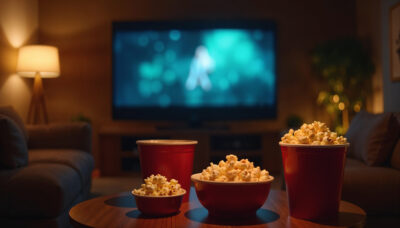
From Theater to Home: New Popcorn Market Trends Explored
The popcorn market trends seem deceptively simple. We see corn, oil, and salt, but we often miss the underlying power struggle. For decades, the true king of kernels was the movie theater. This venue controlled both the viewing experience and the product’s ultimate markup. Consequently, cinema popcorn became an economic behemoth.
However, a cultural tremor started with the click of a remote. The rise of streaming giants like Netflix and Disney+ has fundamentally rewired entertainment. This seismic shift is not just about films; moreover, it is radically changing global popcorn market trends. The shift impacts where we watch, how we snack, and who profits. We are witnessing the dethroning of the Cinema Citadel by the Couch Commandos. This detailed analysis reveals how the humble snack reflects a dramatic change in consumer habits.
The Golden Age of the Cinema Citadel
For nearly a century, movie theaters enjoyed an unparalleled dominance. They perfected the act of turning cheap kernels into high-margin gold. In fact, concessions typically deliver over 40% of a theater’s revenue. This profit stream traditionally subsidizes the volatile ticket sales business. Thus, the classic cinema bucket was not merely a snack; it was the financial bedrock of the film industry.
The theater environment was perfectly engineered for this product. The intoxicating aroma alone acted as a powerful marketing tool. This scent hits you in the lobby, triggering an immediate impulse purchase. The sheer size of the buckets encouraged shared consumption. Furthermore, the dark environment minimized the visibility of greasy hands and spilled salt. The entire experience was designed for maximum, high-volume consumption.
This traditional power structure created specific popcorn market trends. These trends heavily favored bulk sales of unpopped, high-yield kernel varieties. The focus remained purely on the commercial segment. Snack innovation, conversely, stalled for years. This stagnation was because the cinema had no real competitive pressure. The cinema controlled the context, so the consumer bought what was offered. The old Popcorn-Industrial Complex was a closed, profitable loop.
The Disruptor: The Couch Imperative and the New Context
The rise of high-speed internet changed everything. Today, streaming services offer an endless film library for a low monthly subscription fee. Consumers can instantly access premium content from the comfort of their home. This convenience effectively nullifies two major theatrical expenses: tickets and parking. More critically, it removes the need for the $10 popcorn tax.
This behavioral change is the “Couch Imperative.” People no longer feel compelled to leave their homes for entertainment. Consequently, movie theater attendance has declined significantly in major markets. Studios have responded by shortening the “theatrical window” for new releases. For example, many films now appear on a streaming platform just weeks after their cinema debut.
This erosion of theatrical exclusivity directly attacks the high-margin concession model. The old popcorn power source is drying up. This situation is compelling food manufacturers to adapt their product delivery quickly. New popcorn market trends are emerging outside the multiplex. The snack must now fit a casual, at-home, on-demand consumption pattern. This new context demanded a new product king.
The Kernels of Change: The Rise of Ready-to-Eat (RTE)
Consequently, the clearest measurable effect of the streaming revolution is the massive expansion of the Ready-to-Eat (RTE) popcorn segment. Specifically, RTE popcorn is pre-popped, bagged, and shelf-stable. Indeed, it is available everywhere, ranging from supermarkets to local convenience stores. Currently, RTE popcorn now commands the dominant market share globally. In fact, in some analyses, it holds well over 55% of the total popcorn market revenue. Ultimately, this statistic clearly reveals a dramatic, swift shift.
Furthermore, the growth of RTE is a direct consequence of the “Netflix and Chill” phenomenon. That is to say, consumers simply do not want to wait for the microwave. Instead, they desire instantaneous, mess-free snacking. Therefore, the RTE bag truly represents peak convenience for the at-home viewer. As a result, the four minutes typically required to microwave popcorn now seems like a lifetime to the modern, impatient streamer.
Moreover, this change highlights a critical difference in consumer psychology. On the one hand, the cinema experience was a planned, shared ritual. Conversely, home viewing is typically an impromptu, individualized indulgence. Consequently, the RTE bag perfectly serves this spontaneity. Crucially, it requires zero preparation and zero cleanup. Hence, this simple innovation has fundamentally altered the landscape of popcorn market trends.
In addition, RTE has seized control of flavor innovation. Traditionally, the cinema mainly offered butter and salt. However, RTE companies like Angie’s BOOMCHICKAPOP and gourmet brands now offer hundreds of flavors. For example, these include sweet options like caramel and savory options like spicy chipotle cheddar. In this way, the snack has transformed into a gourmet product, rather than just a buttery accompaniment.
Analyzing the New Snacking Dynamics
The RTE segment offers several advantages tailored to the modern consumer.
1. The Convenience Factor
Convenience is the ultimate market driver today. Specifically, RTE popcorn is ready immediately upon purchase. This product fits perfectly into a busy, fragmented lifestyle. The bag is portable, meaning the snack can move from the living room to the home office. This adaptability makes RTE a constant household companion.
2. The Health Halo
Popcorn naturally possesses a powerful “health halo.” It is inherently a whole grain, high in fiber, and generally gluten-free. RTE brands cleverly leverage these benefits. They market “organic,” “low-sodium,” and “non-GMO” versions. Consequently, consumers feel less guilt about eating an entire bag during a binge-watching session. This focus on wellness is driving significant popcorn market trends.
The RTE segment has successfully separated popcorn from the excessive butter of the movie theater. This rebranding has attracted the health-conscious consumer. Moreover, the single-serving or smaller multi-serve bags aid in portion control. This feature appeals directly to those monitoring their calorie intake.
3. The Power of E-commerce
The rise of streaming is directly linked to the expansion of e-commerce. People who stream often also prefer to shop online for groceries. Online retail is the fastest-growing distribution channel for popcorn. RTE is ideally suited for this. The lightweight, durable bags are easy to ship. Thus, the digital age fuels both the entertainment and the snack consumption cycle simultaneously. The data shows that online retail is scaling rapidly in this category.
Investment and Innovation: Responding to Popcorn Market Trends
Major food companies are clearly recognizing this fundamental shift. They are pivoting resources away from traditional bulk ingredients. Instead, they invest heavily in premium, RTE brand acquisition and flavor development. The competition for supermarket shelf space is the new battleground.
For instance, a brand known primarily for microwave popcorn recently launched its first line of RTE products. This move signals an official acknowledgment of the market’s direction. Similarly, other large manufacturers constantly expand their gourmet flavor options. They introduce unique, globally-inspired seasonings. These innovations create dynamic popcorn market trends every year.
Even the microwave segment, while losing share dominance, is evolving. Manufacturers are now offering “clean-label” microwave popcorn. They remove the historically controversial chemical additives and heavy oils. This change is a direct response to the health-conscious popcorn market trends set by the RTE sector. They are fighting back by borrowing their competitor’s health strategy.
The modern market is incredibly competitive. Companies must focus on sustainability initiatives. Consumers demand eco-friendly packaging alongside delicious snacks. Therefore, the Popcorn-Industrial Complex is now characterized by speed, innovation, and environmental mindfulness. This is a complete transformation from the old, slow-moving cinema model.
The Future is Popped: Enduring Popcorn Market Trends
Streaming services did not just disrupt Hollywood. They effectively democratized the popcorn market. They moved the power from the exclusive commercial venue to the consumer’s kitchen pantry. The rise of RTE is an economic fingerprint of the new “Netflix and Chill” culture. It is a measurable market consequence of shifting entertainment habits.
The future of popcorn market trends looks bright. Projections suggest robust growth for the overall market. This growth is primarily driven by the RTE segment and flavor innovation. In short, popcorn remains the ultimate, versatile snack. It has adapted successfully to the digital age.
The final insight is clear. Popcorn is a truly resilient product. It has transcended its carnival origins and its cinema heyday. Today, it is the sophisticated, convenient, and healthy-ish fuel for the streaming binge. The kernels of power have truly shifted to the couch. We should all expect continuous, rapid innovation in flavors and formats. Consequently, the Popcorn-Industrial Complex will continue to expand, one crispy, salted bag at a time. The consumer is now in charge.
About the Author