Pune, India | December 03, 2025
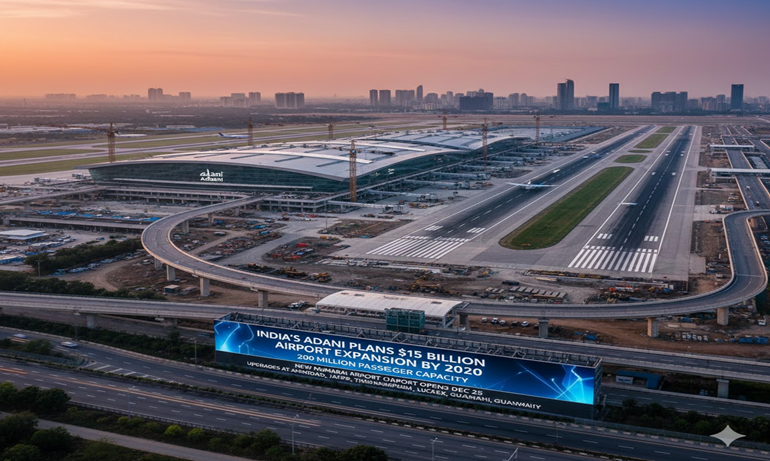
The Adani Group has launched an ambitious $15 billion plan to expand its airport network throughout India within the next five years. This major initiative aims to increase the company’s annual passenger handling capacity to 200 million, establishing Adani as a key player in India’s fast-growing aviation industry.
As part of this plan, the group will construct new terminals, extend taxiways, and build an additional runway at the new airport near Mumbai. This airport is slated to begin operations on December 25. Concurrently, upgrades will take place at airports in Ahmedabad, Jaipur, Thiruvananthapuram, Lucknow, and Guwahati, enhancing infrastructure across these important regions.
The funding strategy involves financing roughly 70% of the expansion through debt over five years, while the remaining amount will come from equity investments. These improvements will increase total passenger capacity by over 60%. That excludes the new facilities from the Mumbai-adjacent airport and the recently launched Guwahati airport, which opens this month.
This expansion directly responds to expected growth in air travel. Experts project that India’s domestic and international passenger volumes will more than double by 2030, reaching 300 million passengers annually. With the increased capacity, Adani aims to manage two-thirds of this anticipated traffic, thereby strengthening its leadership in the aviation sector.
Additionally, the plan builds on an earlier shift from public to private airport management. The government previously operated the six airports set for upgrades, but private companies took control of them in 2020. The authorities continue to privatize more airports, with additional facilities expected to be leased or sold in the coming years.
Advocates believe the project could revolutionize India’s aviation infrastructure. The new terminals and extended runways will help reduce congestion, decrease flight delays, and improve passenger comfort. Furthermore, enhanced connectivity from these upgraded airports can stimulate regional economic growth and boost tourism opportunities.
However, the plan faces several challenges. The heavy reliance on debt financing introduces financial risks if the expected growth does not occur. Coordinating upgrades across multiple cities will also require synchronized development of roads, utilities, and local transportation systems.
Nevertheless, if successful, this expansion could transform India’s airport landscape. By easing congestion at crowded hubs and providing state-of-the-art facilities, the project promises to benefit both passengers and airlines nationwide. Moreover, these upgrades can elevate India’s status in the global aviation market.
Ultimately, the Adani Group is making a bold investment in India’s aviation future. By increasing capacity and improving connectivity, the company aims to meet rising demand and set new benchmarks in convenience, efficiency, and passenger experience by 2030.
About the Author