Pune, India | December 01, 2025
A recent national survey reveals that most UK drivers support mandating alcolocks for those convicted of drink-driving offences. Consequently, public opinion is shifting toward technological solutions over traditional penalties, reflecting growing concern about alcohol-related road incidents. As authorities plan new safety measures, citizens’ perspectives are increasingly shaping policymaking decisions.
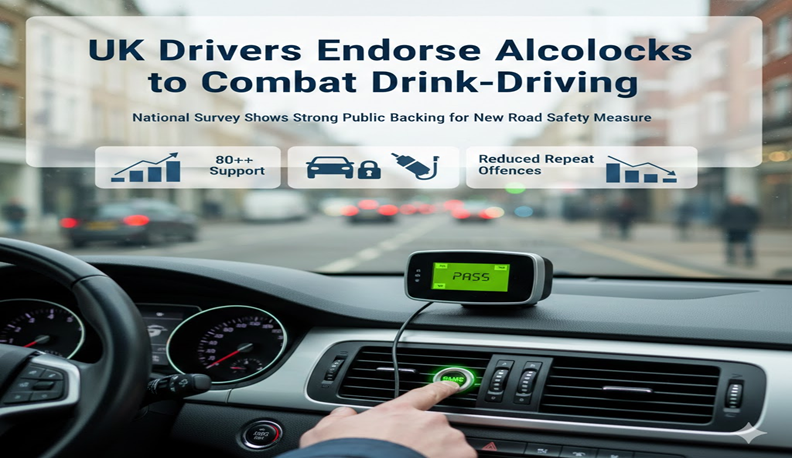
Survey results from thousands of drivers indicate that over four in five respondents favour fitting alcolocks in vehicles owned by individuals previously caught exceeding legal alcohol limits. These devices require a breath sample before engine ignition and automatically prevent the car from starting if alcohol is detected. Because tampering is highly restricted, supporters claim that interlocks offer a reliable barrier against reoffending.
Additionally, most participants believe courts should make these devices part of sentencing procedures. Many argue that existing punishments, including fines, driving bans, and imprisonment, do not consistently prevent repeat offences. Therefore, incorporating mandatory technological safeguards could substantially improve public road safety.
The survey also highlights generational differences. Younger drivers, who often express strong opinions on safety, showed the highest levels of support. Growing up with awareness campaigns about alcohol-related risks, they favour proactive solutions. Older drivers also support alcolocks, albeit slightly less enthusiastically, suggesting broad acceptance across age groups.
Road safety advocates stress the urgent need for reform, pointing out that alcohol-related crashes cause hundreds of deaths and thousands of injuries annually in the UK. Since many of these incidents are preventable, campaigners argue that failing to implement proven technologies would be irresponsible. Evidence from other countries confirms that alcolocks reduce repeat drink-driving incidents effectively.
Experts explain that interlocks provide benefits beyond legal enforcement. Requiring verified breath tests encourages behavioural changes in drivers undergoing rehabilitation. Offenders become more aware of their alcohol consumption and develop accountability, which often leads to safer driving habits over time. Consequently, alcolocks act as both preventive and educational tools.
Authorities are now reviewing the survey findings within the context of a broader road safety strategy expected later this year. If adopted, alcolocks could become mandatory for offenders or an optional judicial tool. This approach would align the UK with countries such as Australia, Canada, and Belgium, which already require interlocks as part of rehabilitation programmes.
Critics, however, express concerns about cost and practical implementation. They argue that installation and maintenance might financially burden low-income offenders. Some also question whether devices could be bypassed despite safeguards. Supporters counter that tampering carries strict penalties and highlight long-term savings from crash prevention, which outweigh initial expenses. Authorities managing similar programmes for banned drivers further suggest that adapting interlock systems is feasible.
Survey analysts warn that drink-driving occurs more frequently than most people realise. A significant portion of respondents admitted driving without certainty about whether they had exceeded legal alcohol limits. Many unintentionally miscalculated their intake. Experts stress that even minor misjudgements can lead to fatal accidents. Therefore, technologies preventing impaired drivers from starting vehicles could save numerous lives.
Public support continues to strengthen as debates unfold. Many drivers believe the UK should act proactively before additional tragedies occur. Alcolocks address the risk at the precise moment it arises, making them an effective solution. Additionally, supporters argue that combining these devices with educational programmes would foster lasting improvements in road safety.
In conclusion, growing public demand for alcolocks marks a crucial shift in UK road safety discussions. While implementation challenges remain, citizens overwhelmingly favour preventive technology that reduces repeat offences. Policymakers must balance widespread support with practical concerns to ensure measures remain both effective and feasible. Ultimately, many drivers view alcolocks as a meaningful step toward safer roads nationwide.
About the Author