AI in the Automotive Industry
The automotive industry has entered an era of rapid innovation. Artificial intelligence (AI) plays a leading role in this transformation. Moreover, from enhancing vehicle safety to revolutionizing manufacturing processes, AI is reshaping how automakers design, build, and operate vehicles. Therefore, let’s dive into the most impactful ways AI powers today’s automotive revolution.
What is AI in the Automotive Industry?
AI in the automotive industry refers to artificial intelligence exhibited by computer systems that rapidly collect, analyze, process, and act on large and diverse datasets. Consequently, AI supports near-real-time decision-making. It also simplifies complex business operations, allowing employees to work with greater precision.
For instance, ERP software integrates Artificial Intelligence and Machine Learning algorithms to analyze large datasets. It identifies trends, patterns, and correlations that might otherwise be missed by humans.
What are the Applications of AI in Automotive?
As Artificial Intelligence technology continues to evolve, it is increasingly adopted across multiple industries. Specifically, here are some practical applications of AI in the automotive industry:
- Driver Behavior Analysis: According to a report by the World Health Organization (WHO), accidental crashes rank as the 8th major cause of death worldwide. Sleepiness is a major contributor. AI’s eye-tracking algorithms constantly monitor the driver’s eyes, head position, and body movements to detect drowsy behavior. Consequently, the AI will automatically alert or wake up the driver.
- Quality Control: AI-integrated Manufacturing ERP revolutionizes the manufacturing process by speeding up defect identification. AI algorithms perform quality control checks at every stage. They compare product quality with the Acceptable Quality Limit and notify the manufacturer about potential defects before the vehicle reaches the final consumer.
- Personalized Experience: AI-powered music and video streaming systems in vehicles enhance passenger entertainment. AI analyzes the user’s listening habits, mood, and individual tastes. Accordingly, it builds a curated playlist for a far superior and engaging experience.
- Manufacturing Design: AI-powered Automotive ERP streamlines various manufacturing processes, including planning, tracking, designing, and resource management. Thus, it reduces the time taken for design approvals and promotes better workflow.
- Predictive Maintenance: Predictive maintenance is a key benefit of Maintenance Software. It collects data on the vehicle’s real-time condition and performance through various sensors attached to the vehicle. As a result, potential issues can be detected early, reducing downtime.
Limitations of AI in the Automotive Industry
No technology is perfect, and AI is no exception. Nevertheless, here are some major limitations of deploying AI in the automotive industry:
- Technological Glitch: Software bugs and glitches in Driver Assistance Systems (ADAS) can pose serious safety and security threats to passengers, other vehicles, and pedestrians.
- Compliance Issues: As the self-driving vehicle industry rapidly evolves, there is a constant need to monitor regulatory requirements. Fortunately, ERP applications can help ensure higher adherence to these regulations.
- Intellectual Property Rights: There are ongoing debates about the legality of data used to train AI modules. Some individuals and businesses believe AI companies may be violating intellectual property rights.
Enhancing Automotive Manufacturing with AI
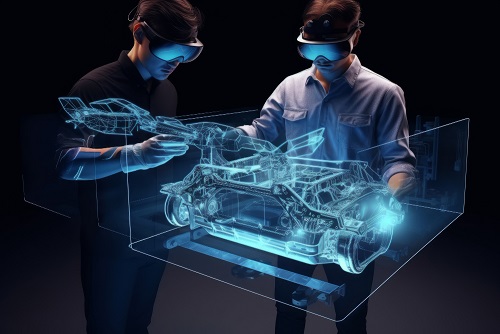
Automotive manufacturing involves many complex, interconnected processes. These processes impact both the overall cost and speed of delivering vehicles to market. Therefore, AI is helping improve efficiency and effectiveness in the automotive market. Vehicle manufacturers use AI to accelerate the vehicle design engineering process. They leverage generative AI to generate iterations on design ideas, helping create innovative and efficient designs.
Related article- Eldercare Advances as AI Enhances Support for Care Workers
New Trends in the Self-driving Vehicle Industry
The self-driving car industry is experiencing rapid economic growth, thanks to the adoption of Artificial Intelligence (AI) and Machine Learning (ML). Here are some new trends in the industry:
- AI Integration in EVs: AI is reshaping the electric vehicle (EV) industry by optimizing battery lifespan, strengthening energy-saving mechanisms, and elevating the overall driving experience.
- Vehicle-to-Everything (V2X): Vehicle-to-Everything technology facilitates communication between cars and their surroundings (such as traffic signals). This helps simplify and safeguard journeys. Hence, V2X is a crucial step towards building roads for fully autonomous vehicles.
- Custom Vehicle Personalization: AI has empowered automotive businesses with unprecedented manufacturing design opportunities. It also provides supply chain management tools to cater to diverse customer needs and offer personalized experiences.
- Research in New AI Models: Increasing research focuses on developing new AI models. These models are based on advanced algorithms that provide superior accuracy. They can analyze data and provide near-real-time solutions.
Wrap Up
The automotive industry is undergoing a major shift and witnessing significant innovations in recent years. The adoption of data analytics, machine learning, and AI is set to drive transformations, manage risks effectively, and build higher levels of consumer trust.
In conclusion, Sage X3 is a versatile software solution. It allows automotive companies to harness the transformative power of generative AI, adapt to changing industry needs, and embrace the many benefits this technology offers.
About the Author