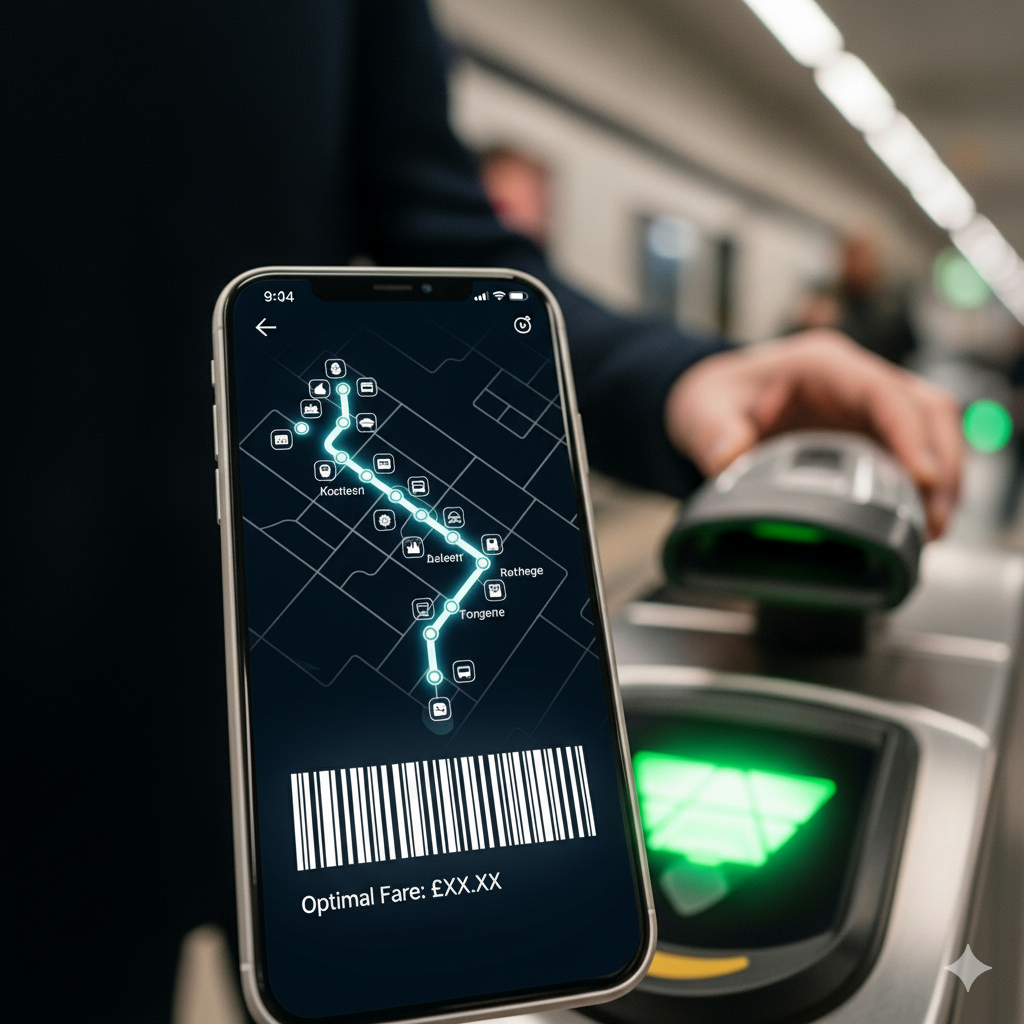
A groundbreaking trial has begun in England, and passengers now explore a fresh pay‑as‑you‑go system that uses GPS. Instead of buying traditional print or QR‑code papers, people rely on digital Rail Tickets delivered by an app. They download the app, check in, and the system tracks journeys via GPS. As a result, the app calculates the optimal fare for each trip. Consequently, uncertainty vanishes. The app displays a unique barcode, which passengers scan at barriers. This method offers swift and seamless travel. The new system replaces paper or mobile QR‑code options for Rail Tickets. It defines a new era in how people access train services.
Moreover, East Midlands Railway leads this pilot. Northern Trains will join soon. At first, the trial runs in Leicester, Derby, and Nottingham. Then it extends to Yorkshire, including Harrogate, Leeds, Sheffield, Doncaster, and Barnsley. Up to 4,000 people can take part. They sign up via operator websites. In addition, the government funds the trial with nearly £1 million. Thus, this level of support underscores a serious commitment to change. Authorities long criticized the current system as too complex. Indeed, reformers welcomed this trial, since it promises more flexible travel and easier fares. Moreover, it simplifies travel. Also, it ensures passengers pay fairly. In turn, they save time and money. It further encourages more people to choose rail.
Internationally, similar systems exist. Switzerland and Denmark already use such GPS‑based methods. Scotland also piloted one successfully. Yet, this marks its first trial in England. The government views it as modernising transport. It prioritises passengers. Indeed, the system does just that. Passengers encounter easier decisions. They gain transparency about fares. They travel with confidence. This trial is a positive milestone. It represents progress toward a modern ticketing system.
Furthermore, the technology promises a better experience. Oli Cox of East Midlands Railway stated that complex fares represented a barrier. This new system removes all that uncertainty. Consequently, customers gain peace of mind. They pay the best price, benefit from fair pricing, and enjoy smoother travels and better Rail ticket procedures. The trial forms part of a broader government plan to transform railways under Great British Railways. That new entity aims to streamline services. This pay‑as‑you‑go pilot aligns neatly with that vision. It shows how technology may improve passenger experiences. It may also attract more users to trains. That, in turn, supports economic growth. Therefore, this trial has broader benefits beyond merely Rail Tickets.
The trial thus signals a potential new era. It goes beyond traditional ticket models. When successful, it could expand across the nation. It would make rail travel simpler. It would make purchasing Rail Tickets easier. In summary, the trial offers a clearer future. It benefits both passengers and operators. It gives hope for national change.
In conclusion, this live trial brings GPS‑enabled pay‑as‑you‑go Rail Tickets to England. Passengers download an app, check in, and let GPS define fares. The app then shows a barcode to scan at barriers. East Midlands Railway leads the way. Northern Trains will join soon. The pilot covers Leicester, Derby, Nottingham, and later parts of Yorkshire. Up to 4,000 people may participate. Government funding of nearly £1 million signals serious backing. Authorities hope the trial simplifies fares, ensures fairness, and saves both time and money. Similar systems operate abroad. Scotland, Switzerland, and Denmark already use related models. The trial fits broader rail reform plans. It demonstrates how smart technology can modernise travel. Ultimately, this initiative could bring a new era of simple, fair, pay‑as‑you‑go Rail Tickets to the country. It stands as a welcome innovation.
About the Author