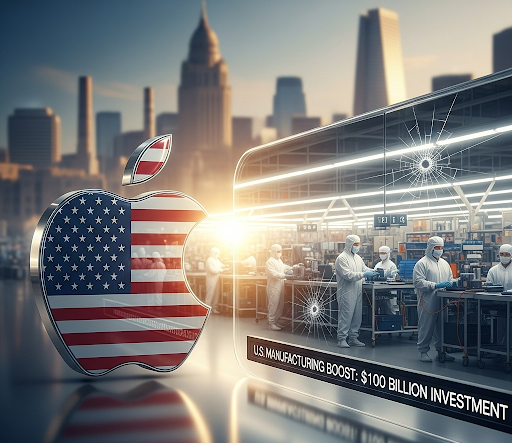
Apple Pledges $100 Billion Boost to U.S. Manufacturing Amid Tariff Risks
August 7, 2025 | New Delhi, India – Apple Inc. announced a $100 billion increase to its U.S. investment commitment. This raises the total to $600 billion over the next four years. The announcement took place at the White House, where President Donald Trump and Apple CEO Tim Cook appeared together. This move signals Apple’s aggressive drive to expand its manufacturing footprint in the U.S.
This investment aims to strengthen Apple’s supply chain and expand advanced manufacturing across the country. It comes amid rising trade tensions. Earlier this year, Trump threatened a 25% tariff on iPhones and other Apple products made overseas. This threat came despite earlier exemptions on electronics. Analysts say this move could help Apple avoid new tariffs and smooth relations with the government. Apple continues to carefully navigate the complexities of global trade amid mounting political pressures.
President Trump, who has urged U.S. companies to bring manufacturing back home, welcomed the announcement as a win for his industrial agenda. “Companies like Apple, they’re coming home,” Trump said. “This is a significant step toward ensuring iPhones sold in America are also made in America.”
Although Apple has not committed to assembling entire iPhones domestically, Tim Cook highlighted that many critical parts, such as chips, glass, and facial recognition components, already come from U.S. factories. He added that Apple will continue to assemble the final products overseas “for a while,” due to the complexity of its global supply chain.
Apple expanded its investment through new partnerships with U.S.-based suppliers like Corning, Applied Materials, Texas Instruments, Broadcom, and GlobalFoundries. Samsung will supply chips from its Texas plant. GlobalWafers will provide silicon wafers from a recently upgraded facility. These partnerships should boost job creation and manufacturing activity in states including Texas, Arizona, and New York.
Despite the announcement’s scale, some analysts remain cautious. They note Apple typically spends at this level. They find it unlikely the company will produce all iPhones domestically due to high labor costs and logistical challenges. Nevertheless, this strategic investment aims to ease political tensions while steadily expanding Apple’s domestic manufacturing presence.
Following the news, investors drove Apple shares up 5% on Wednesday. Key suppliers Corning and Applied Materials also gained in after-hours trading. For now, Apple’s approach balances political demands with business realities as it adapts to ongoing global trade uncertainty.
About the Author